From Fast Jet Pilot to Business Owner: Helen Lunnon-Wood on RAF Life, Motherhood and Finding Your Why
In the late 90s, about one in 60 trainee RAF pilots was a woman. Helen Lunnon-Wood was one of them.
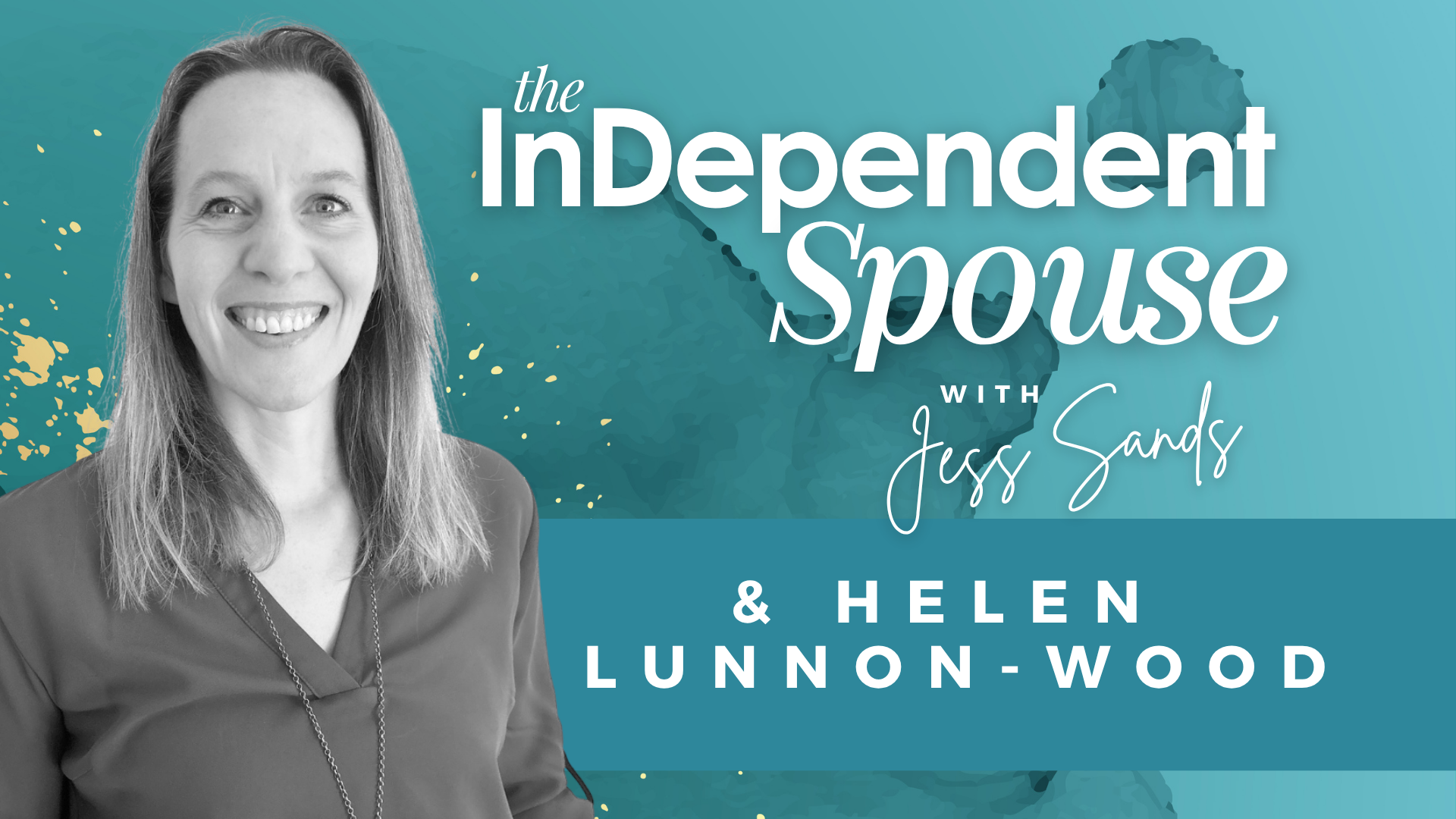
I’ll be honest, gang, I’ve been itching to get Helen on the podcast. She’s a superstar human. 27 years in the Air Force, fifteen of them flying fast jets, then marriage to a fellow pilot, two kids, a stint in career management, and now her own coaching business, High Flight.
She’s lived this life as a serving woman, a spouse and a veteran, and she’s honest, funny and full of wisdom about all three. And yes, of course I quizzed her about the flying. I couldn’t help myself.
She joined it, then she married it
Helen joined the University Air Squadron with one plan: to be a completely independent fast jet pilot. Getting married? “Good lord, no, far too independent,” she laughs. I think a lot of us can relate to that one!
Then, about fifteen years in, everything turned up at once. A husband, then the kids, a posting to “fly a desk” for a while, and a migraine diagnosis that brought her flying days to an end.
Making a dual-serving marriage work
If you think juggling one military career is tricky, try two. Helen and her husband were both on the GR4 force, until he moved over to Reaper. Then parenthood came along and changed everything, from her priorities to how she saw risk.
She turned down Staff College because she had a brand-new baby, and the next year they didn’t even put her forward. The year she’d actually have said yes! But it wasn’t all frustration. Their two career managers once put their heads together and found them both jobs in the same American city, for the same length of time.
Her verdict? It can be done, but it takes give and take from everyone: the RAF, the policies, the people and the couple. And nearly always, somebody has to flex for a while. Sound familiar?
Meet one of the mysterious “they”
Let’s be honest, we all love to blame “them”. They’re sending him away again. They’ve changed the posting. Well, Helen was one of them! She spent three years in career management, trying to balance what the service needed with keeping good people in.
And she really got it, because she’d been the spouse at home too. Integrity mattered so much to her that she deployed herself, rather than ask others to do something she wouldn’t. She even apologised on air in case she’d ever sent my husband away. I’ll let her off.
Her advice is brilliant: be proactive. A deployment will land at your feet eventually, so talk about it early and plan when works best for your family. In her experience, the people who planned ahead coped better before, during and after.
Hypervisible and invisible
This is where Helen really got going, and I loved it. As a woman flying fast jets, she was hypervisible and invisible at the very same time.
Hypervisible, because she was often the only woman in the room, the different voice, the one pushed to the front of the squadron photo. Invisible, because everything was designed around the average man: the cockpit, the ejection seat, the body armour, even the fire-retardant clothing, which gapped in all the wrong places.
At five foot ten, Helen fitted. But that wasn’t luck. Pilots were selected against male standards, so the cockpit was choosing the pilots, not their ability.
Near the end of her career, she asked a senior officer whether kit was now tested on women. The answer? No, but it had been tested on 10,000 men. Things are changing, she says, partly because women like Helen kept pushing for it.
Why her maternity leave is on her LinkedIn
This is the bit that’s really stayed with me. So many of us hide the gaps on our CVs: the postings, the moves overseas, the years at home with the kids. Helen does the complete opposite. Both of her maternity leaves are right there on her LinkedIn, loud and proud.
She reckons she learnt more about project management, money, negotiation, mental health and community in those months than in almost any other job. And as a fast jet pilot with, in her words, zero patience, a screaming baby who couldn’t tell her what was wrong taught her a whole new skill set!
As she says, calling it maternity leave is a bit of a misnomer. There was no leave involved. It was hard work. I’ve said before that defence is held up by a group of very misunderstood, exhausted women, and this is exactly what I mean.
Have you found peace?
One of the most important questions Helen’s ever been asked isn’t “Are you happy?” It’s “Have you found peace?”.
For Helen, peace comes from knowing her why. Hers is simple: to be the mum she wants to be, home when her kids are home, with her work fitting around them. Everything else sits around that.
It’s exactly what I bang on about on our start-up course. Register with HMRC, and sort out your why. Because on a rainy Tuesday in February, when you’re crying into the phone at the HMRC website, your why is what keeps you going.
High Flight and Icarus
These days, Helen runs High Flight, offering personal and business coaching, leadership and teamwork. She studied psychology and just loves people, and it shows. As she puts it, humans are endlessly fascinating.
She’s also a trustee of Icarus, a small charity supporting veterans and their families with their mental health. I hadn’t heard of them before, and I’m so glad I have now. Around 25 volunteers, from EMDR and CBT therapists to coaches and mentors, help roughly 400 to 450 people a year. And here’s the important bit for us: spouses can self-refer, for themselves, their veteran partner or their adult children, without going through a GP.
Helen’s advice for going self-employed
Helen describes herself now as a spouse, a mum and a business owner first, though she’ll always be a veteran. And after years of the military handing her a structure, an email address and a pay cheque every month, purchase orders and National Insurance were a whole new world.
I always say on our course: if you can wave someone off to a war zone, you can start a business. Helen has literally flown fast jets into them, so she’s more than got this! Her first-step advice:
- Be deliberate. Peel back the layers of transition, including your identity, not just your finances.
- Talk to loads of people. Ask others who’ve done it what was hard, what was easy and what they wish they’d done.
- Give yourself some grace. Eighteen months on, she’s still transitioning, and that’s absolutely fine.
Finding your people
This bit made me well up a little. Helen told me that when she felt like she didn’t know what she was doing, she came along to one of our Milspo virtual events. And in the breakout rooms she found a tribe who just got it: the moves, the kids driving you up the wall, not knowing where you’ll be next. As she put it, she could finally exhale a tiny bit.
That, gang, is exactly why Milspo exists. You don’t have to explain where your other half has gone or why you’ve moved again. We just get it.
Listen now
So grab a cuppa and catch the full conversation with Helen Lunnon-Wood on Episode 84 of The InDependent Spouse, on YouTube and wherever you get your podcasts. Thank you, Helen, for being such an epic guest!