Does the MOD Value Military Families? I Asked the Veterans Minister
For years, gang, you’ve been asking me to get someone from the MOD on the podcast. Well, I did it!
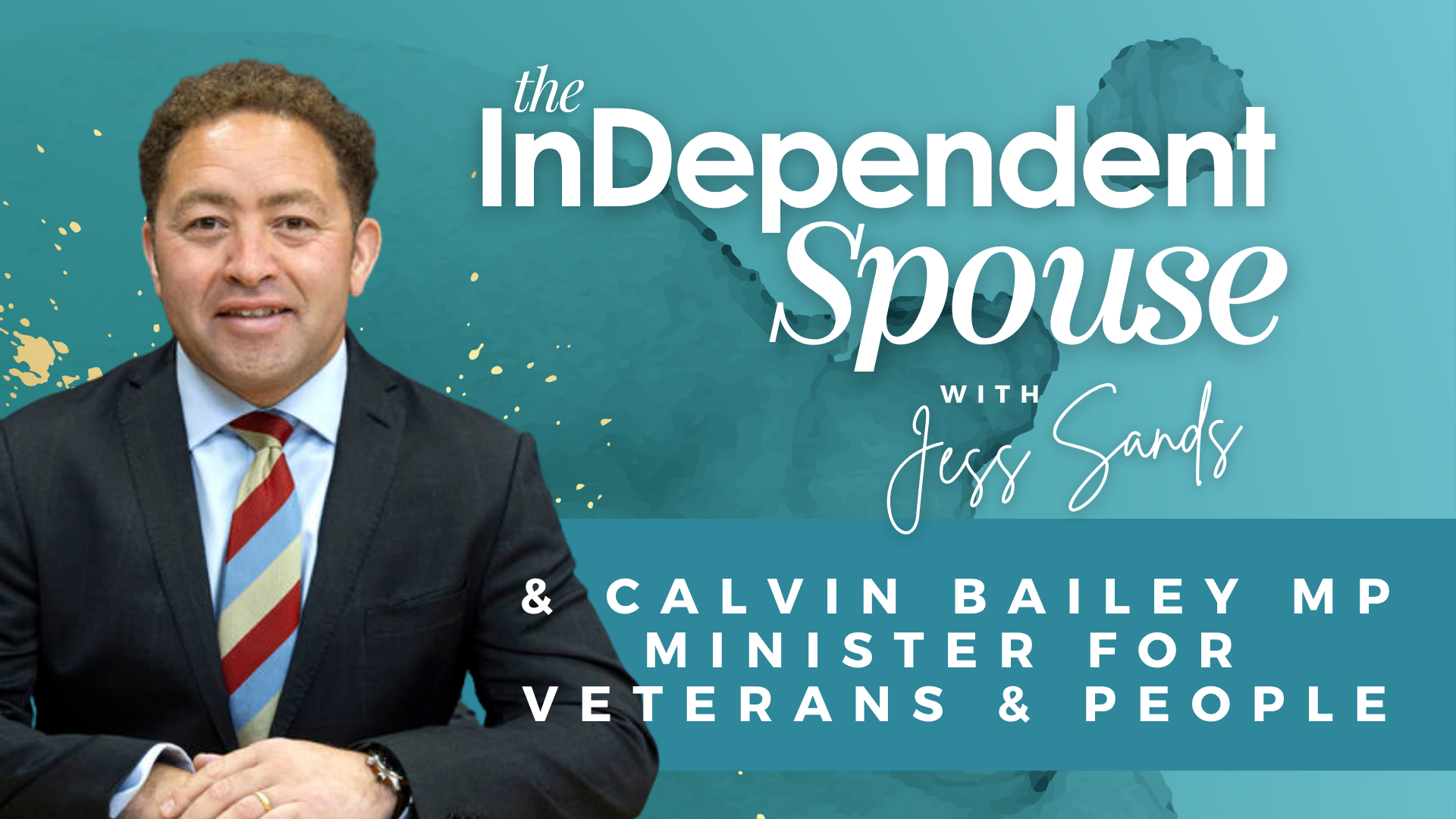
This episode, I’m joined by Calvin Bailey MP, Minister for Veterans and People. His job covers the whole of a service journey, from cadets to serving to veterans. But he’s also lived it: 25 years in the RAF, married to his wife Melanie, with all the moves, deployments and service family life that comes with it.
So I didn’t hold back. I asked him the questions I know so many of you want answered. Are military families undervalued? Are we part of the conversation? And why is there still no day that celebrates us?
One journey, with families alongside it
Calvin sees cadet, serving person and veteran as one continuous journey, and he’s responsible for all of it. But what really caught my ear was this: he believes there should be a second timeline running above that journey, for the family.
His point was that the military has often only thought about families in the middle bit, when they’re living alongside the serving person and absorbing the consequences of service. But families are there at every stage.
He gave a brilliant example. How often have you heard “Jones can cover this weekend, he hasn’t got a family”? As Calvin said, we all have families. It’s just how far away they are that changes. He also recognised that the traditional nuclear family a lot of policies were built on has changed, and families today come in all shapes and sizes.
And then the bit that matters so much to so many of us: transition. We talk a lot about supporting service people as they leave, but as Calvin put it, we don’t transition the people who live beside them. He admitted he fell foul of that himself.
Are military families undervalued?
I’ll be honest, this was the question I most wanted to ask. I genuinely believe military families underpin service life, and yet for years, unhappy families have been one of the main reasons people leave. So are we undervalued?
Calvin said retention is improving, and pointed to the investment in service family housing, which he said has made a real difference to how families report feeling in the forces’ own surveys. He also spoke warmly about Melanie, and how much he owes her support over 25 years.
But he was refreshingly honest about where the MOD falls down: telling families what’s actually on offer. In his words, “we don’t always communicate the things that are being done for us very well.” And if the message doesn’t get home, neither does the benefit, and families feel undervalued.
The pension conversation he never had
This was the moment that made me sit up. Calvin admitted that in all his years of service, he never really spoke to Mel about his pension. Neither of them understood how much it was worth until he’d left, and they had to start making contributions themselves.
He wants every service family to understand the full value of what’s on offer before they decide to leave, not afterwards. He even said he only found out within the job that his own children could benefit from being service children for years after he’d left.
If you take one thing from this episode, gang, make it this: sit down with your other half and talk about the pension. Seriously.
Are families part of the security conversation?
The world feels a bit less stable at the moment, and there’s a lot of talk about preparing the country. Most of us live near bases, and our children go to nurseries on them. So I asked whether military families are actually considered.
Calvin was clear that the safety and security of service people and their families is the MOD’s first responsibility, and that families are at the heart of that planning. Again, though, he admitted they need to get better at telling families so, because feeling safe comes from knowing you’re part of the process. Growing up in Woolwich, he saw first-hand what it meant to live inside or outside the wire.
His message to us was simple: “We haven’t forgotten you. You are very important to us.”
“You are always in the room”
I pushed Calvin on whether his own family’s experience actually shapes his decisions. Families are so often not in the rooms where decisions get made, because we’re too busy keeping everything going in the background.
His answer gave me goosebumps: “You are always in the room, Jess. Everyone that I served with is in the room with me.”
He told me he measures policy against real experiences, and that if he didn’t, he’d be betraying 25 years of service, friendship and camaraderie. And, he added, Mel wouldn’t be very happy with him at all!
Could we have a Military Family Day?
We’ve got National Cadet Week. We’ve got Armed Forces Week. We celebrate veterans, quite rightly. But there’s no day for military spouses, partners, husbands, wives, girlfriends and boyfriends. So I asked Calvin, could we share a bit of the love with families, please?
His answer: “Challenge accepted.” He said he’d look at how Armed Forces Week can speak to families too. I’ll be holding him to that!
He also shared a story that summed up why this matters so much. After a super typhoon devastated the Philippines, he met a Filipino general who expected his troops to go home for a few days first, to make sure their own families were safe. Calvin realised that in our forces, we ask people to do the opposite: to go out and help others, trusting that home is looked after.
As he put it, service people can’t do what they do unless they’re comfortable that their families are OK at home. If that breaks down, we don’t have an armed forces.
Listen now
Thank you so much to Calvin for making time on such a busy day, and for being so open. He’s already said he’d come back, so I’d love to hear what you’d ask him next.
So grab a cuppa and catch the full conversation on The InDependent Spouse, on YouTube and wherever you get your podcasts. Jess x
- Share your questions for next time in the Milspo Community: https://www.facebook.com/groups/MILSPO
- Join our free virtual networking: https://milspo.co.uk/virtualnetworking
- More episodes: https://milspo.co.uk/podcast